
Think You Might Have a Verruca? Here’s What You Need to Know
Think You Might Have a Verruca? Here’s What You Need to Know
If you’ve noticed a small, rough pa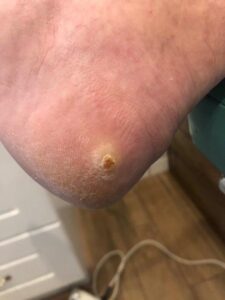 tch of skin on your foot that’s become uncomfortable—especially when walking—you might be wondering: is this a verruca? You’re not alone. Verrucae are one of the most common reasons people visit a podiatrist, and the good news is that they’re very treatable.
What exactly is a verruca?
A verruca (also known as a plantar wart) is a skin lesion caused by the human papillomavirus (HPV). This virus infects the outer layer of skin, typically entering through tiny breaks or areas of irritation.
They often have a few distinctive features:
- A small, well-defined area of thickened skin
- A rough or “cauliflower-like” surface
- Tiny black dots within the lesion (these are small blood vessels)
Because of their location on weight-bearing areas, verrucae can sometimes be mistaken for corns or callus—but the cause and treatment are quite different. https://www.nhs.uk/conditions/warts-and-verrucas/
How do you catch a verruca?
HPV thrives in warm, moist environments, so places like swimming pools, communal showers, and gym changing rooms are common sources of transmission. Walking barefoot in these environments can increase your risk, particularly if the skin barrier is compromised.
It’s also worth noting that not everyone exposed to the virus develops a verruca—your immune system plays a big role in whether the virus takes hold.
Do verrucae go away on their own?
In some cases, yes. The body’s immune system can eventually recognise and clear the virus, but this process can take months—or even years. During that time, verrucae can become painful, spread, or increase in size.
For many people, especially those with discomfort or multiple lesions, treatment is the preferred option.
When should you seek treatment?
You might consider seeing a podiatrist if:
- The lesion is painful or affecting your walking
- It’s spreading or multiplying
- You’re unsure whether it’s a verruca or something else
- Over-the-counter treatments haven’t worked
What treatments are available?
There are a range of treatment options we offer here at One Step Ahead Podiatry, depending on the size, location, and persistence of the verruca. These may include:
- Debridement (removal of overlying hard skin)
- Verrutop, a topical treatment using a combination of zinc and acids
- Verruca Needling, performed under local anaesthetic, a clinical procedure which encourages the body’s immune system to recognise and clear the virus
- Swift microwave therapy, a modern and highly effective option that stimulates the body’s immune response to target the virus
We will help guide you toward the most appropriate treatment based on your individual case. You can find more in depth information about our treatments here:
While verrucae are common and usually harmless, they can be stubborn and uncomfortable. Early assessment and appropriate treatment can make a big difference—not just in resolving the lesion, but in keeping you active and pain-free.
If you think you may have a verruca, it’s always worth getting it checked. A quick assessment can provide clarity and set you on the right path to recovery.